Key takeaways
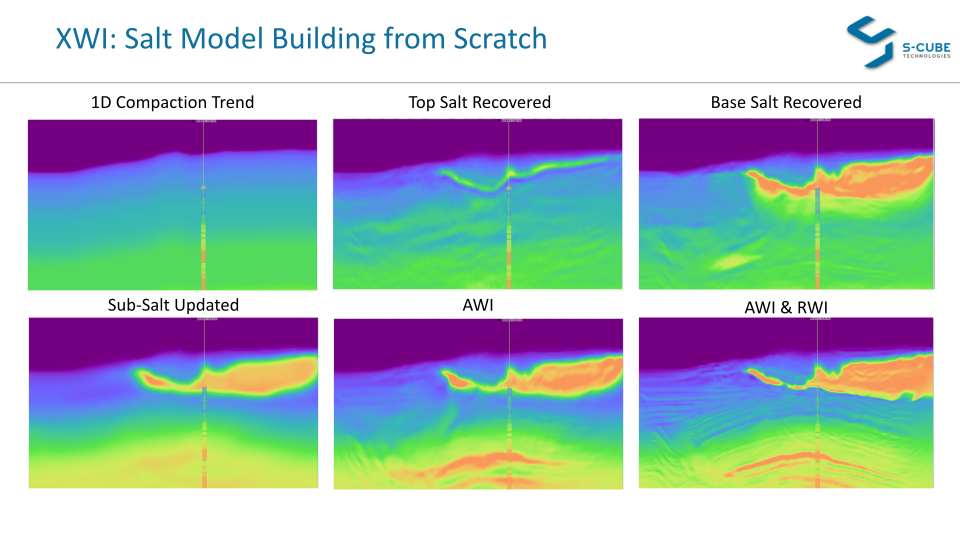
- ▹In the first move of this update, interleaved TSL-AWI and RWI corrected the sub-salt velocity trend of the ALM 50 m model.
- ▹Iterating AWI and RWI further sharpened the salt boundary and repaired the remaining sub-salt velocities.
- ▹FWI-derived reflectivity tracks how the model responded at every step — the inline captures the salt, the crossline captures the sediment velocities.
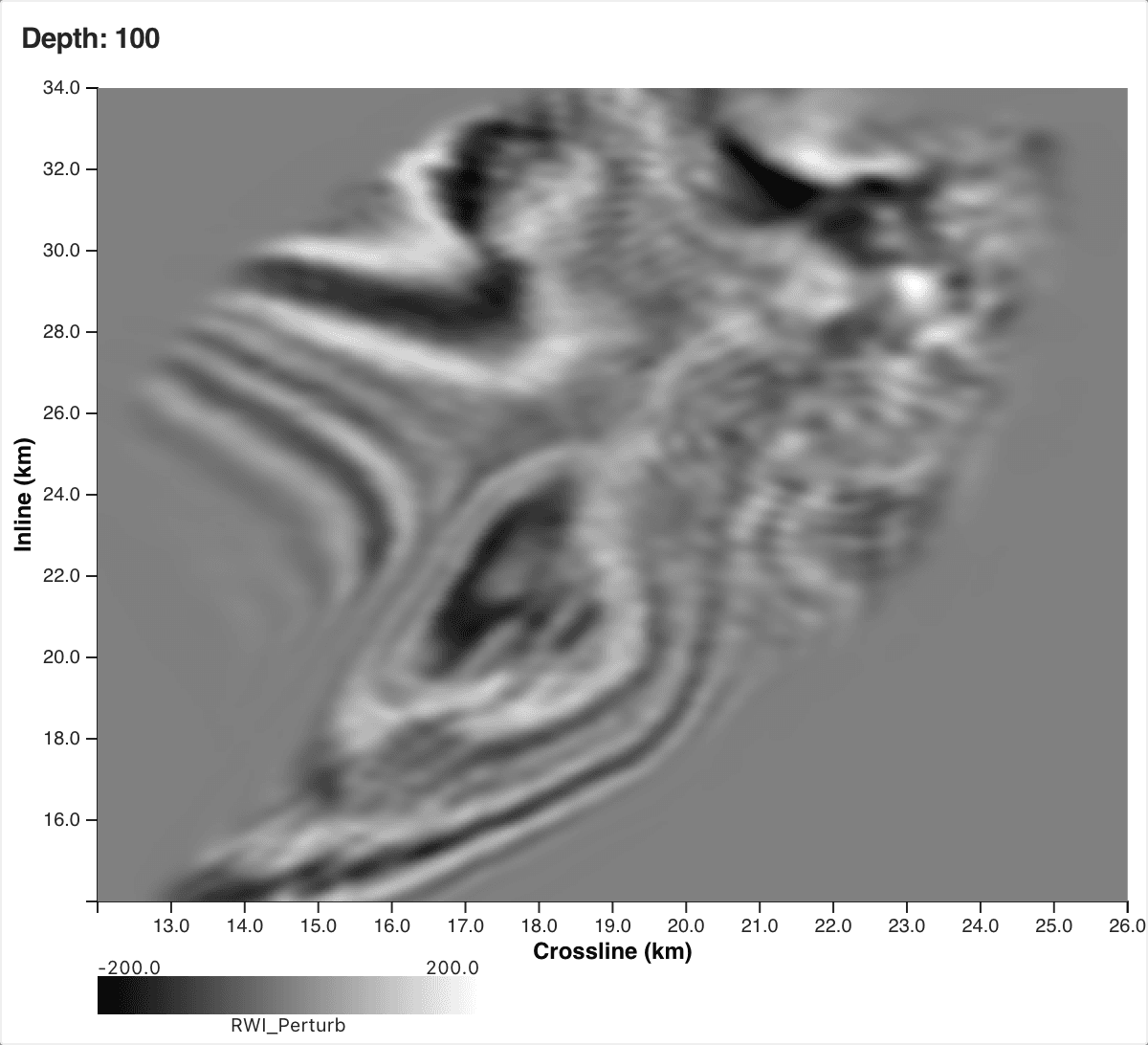
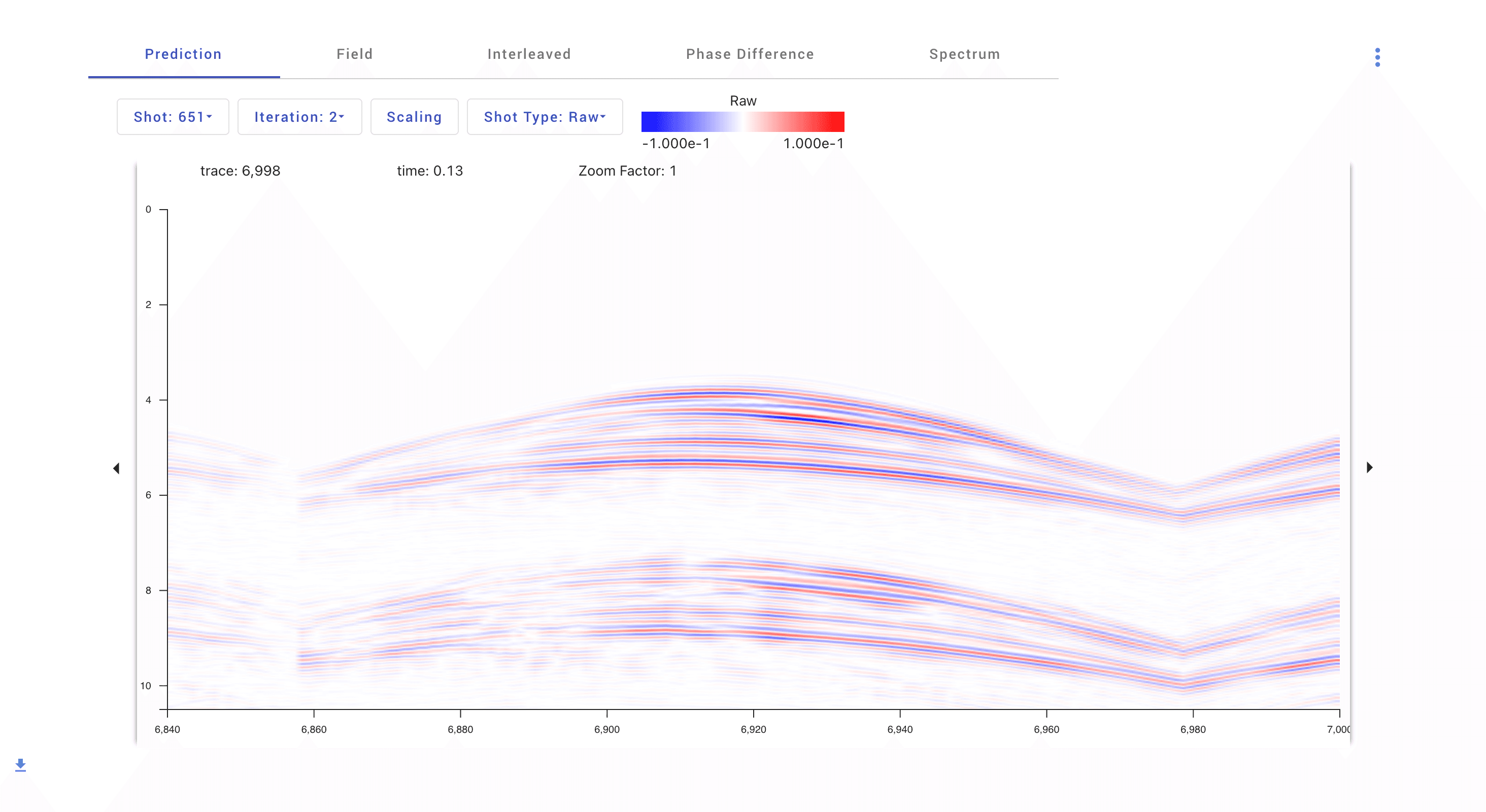
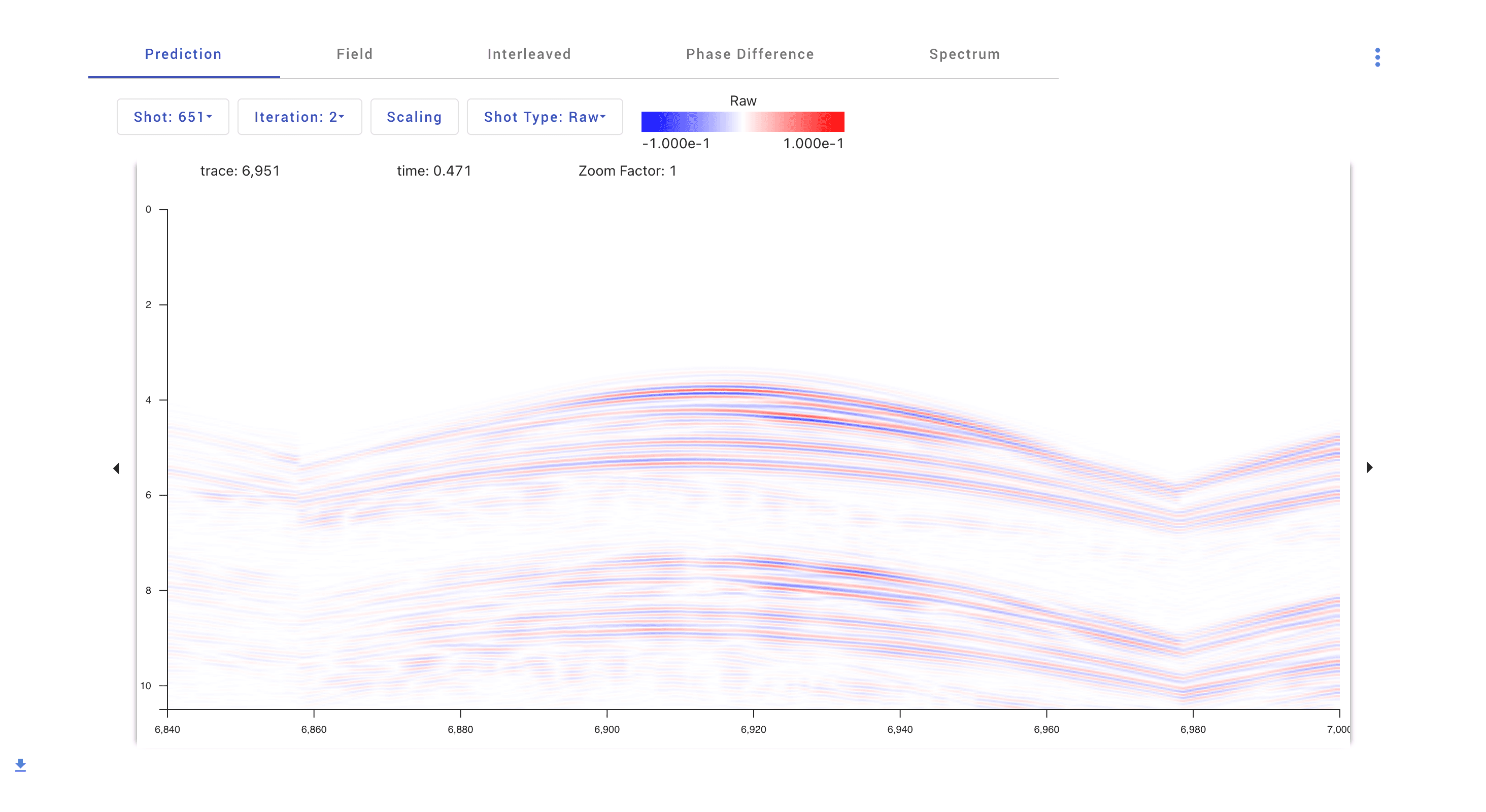
- ▹Targetted RWI focuses the update on the key reflector beneath the salt — visible in section, in map view, and as changes in the predicted data.
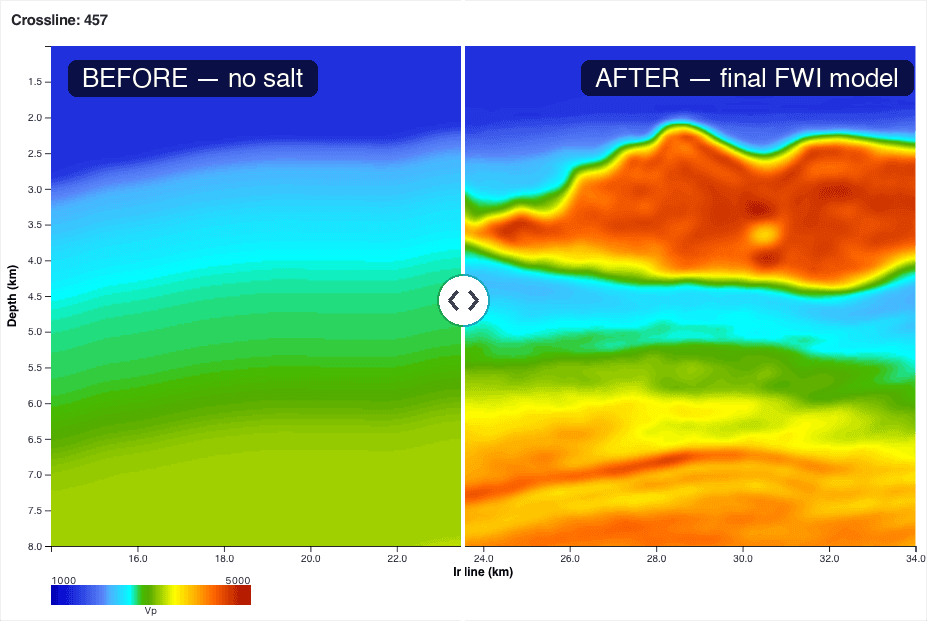
In Breaking Through Complex Salt we walked through how a Gulf of Mexico salt model at Alaminos Canyon (ALM) was built entirely from scratch — no salt, no picked horizons, no well data. This post is an in-depth look at what the interplay of Adaptive Waveform Inversion (AWI), Reflection Waveform Inversion (RWI), and Time-Space-Lag AWI (TSL-AWI) actually does to the model between three important checkpoints — and how we track that response in the reflectivity and in the data itself.
Three checkpoints, two moves
Every stage of the workflow leaves behind a checkpoint — a snapshot of the evolving velocity model. The three that matter here are best named by what the model looks like at each one:
- Salt emerging— the model as the salt first takes shape: a high-velocity body with diffuse edges, sitting on a sub-salt trend that is still wrong.
- Trend corrected— after interleaved TSL-AWI / RWI targeting the sub-salt velocity trend.
- Salt sharpened— after further iterated AWI and RWI passes to sharpen the salt and fix the remaining sub-salt errors.
How to read the panels
Each figure below pairs two orthogonal slices through the same 3D model. The left panel, inline, cuts directly through the salt body — it is where the salt story unfolds: the top-salt rugosity, the overhang, the base. The right panel, crossline, samples the sedimentary section away from the salt — it is where the sediment velocity story is told: the background trend, the layering, and the deep, high-contrast key reflector between roughly 6.5 and 7.5 km depth.
First move: correcting the sub-salt trend
At the salt-emerging checkpoint the salt exists only as a smooth high-velocity mass, and — harder to see, but more consequential — the velocity trend beneath and around it is systematically wrong. The first move is interleaved TSL-AWI and RWI aimed squarely at that trend. TSL-AWI's multi-dimensional matching filters capture the residual moveout that betrays a trend error; RWI uses the reflections themselves to push long-wavelength updates down into the poorly-illuminated section. Drag the slider and watch the crossline: the whole sediment column reorganises, with velocity structure moving deeper and taking on geologically plausible relief.
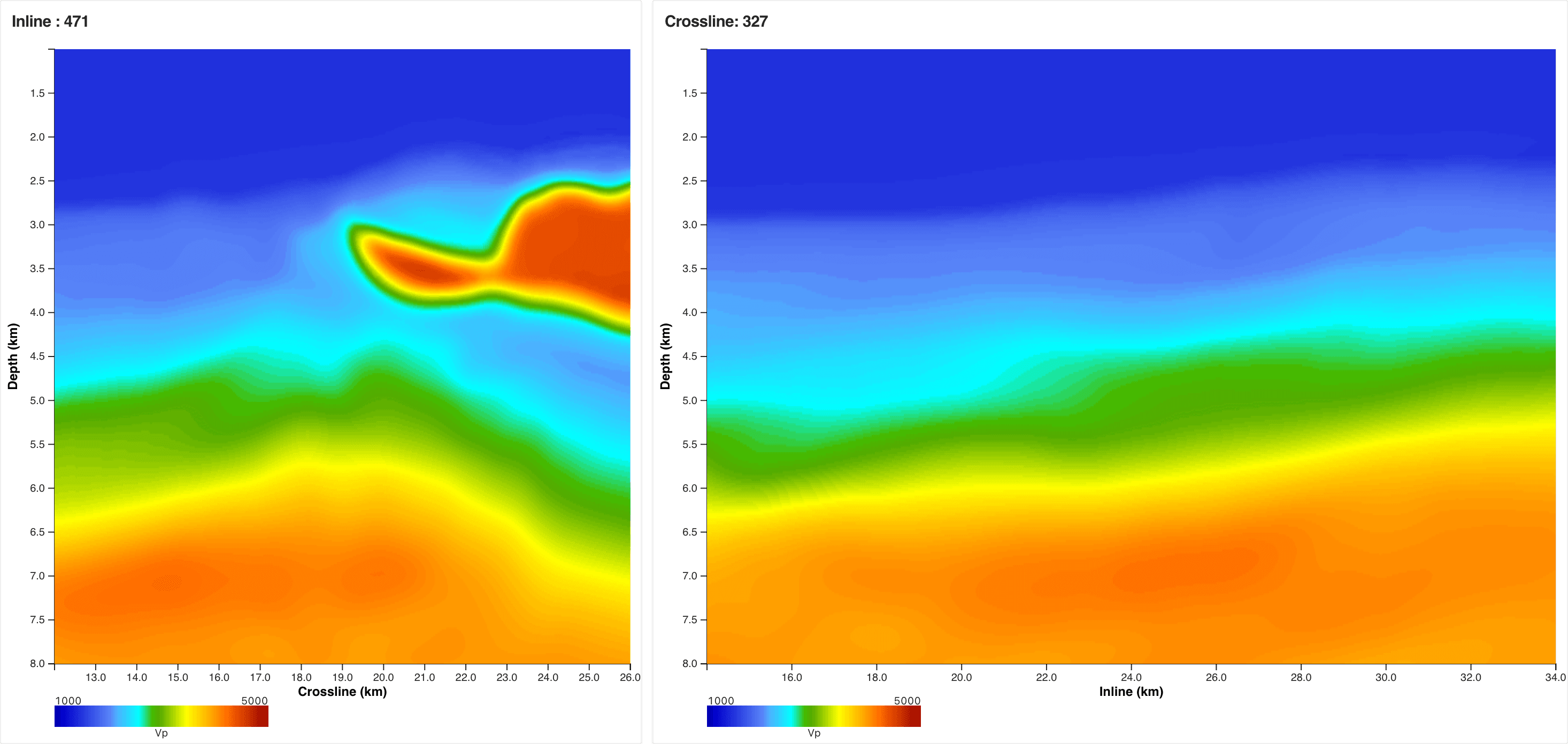 Trend corrected · TSL-AWI + RWI
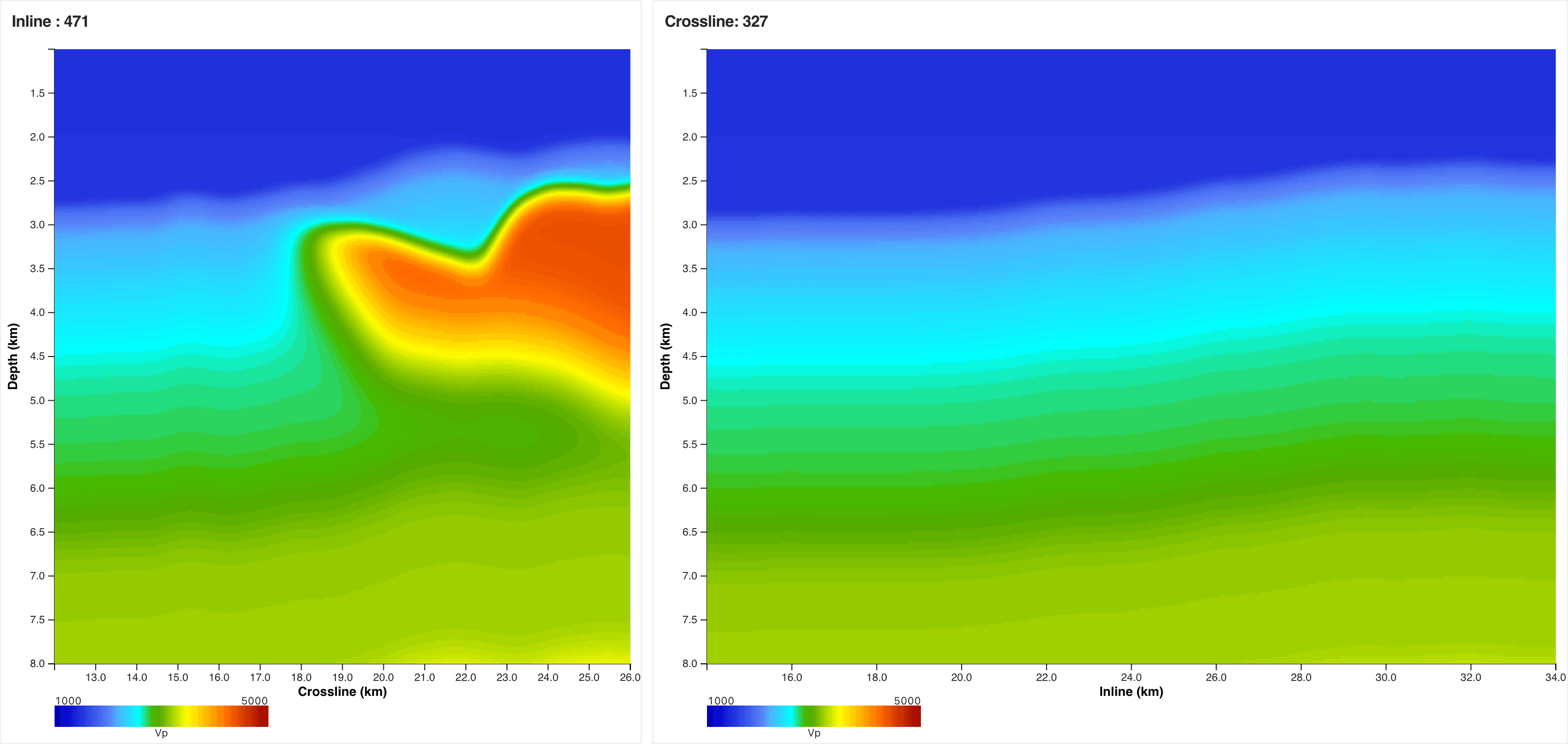 Salt emerging · before
Second move: sharpening salt, repairing sub-salt
With the trend on the right footing, AWI and RWI are iterated — AWI refining the model where transmitted energy constrains it, RWI keeping the reflection kinematics honest. By the salt-sharpened checkpoint the salt has gone from a rounded blob to a sharply-bounded body with real geometry: a crisp top salt, a resolved overhang and a clean base. Beneath it, the sub-salt velocities that were still smeared after the trend correction settle into place.
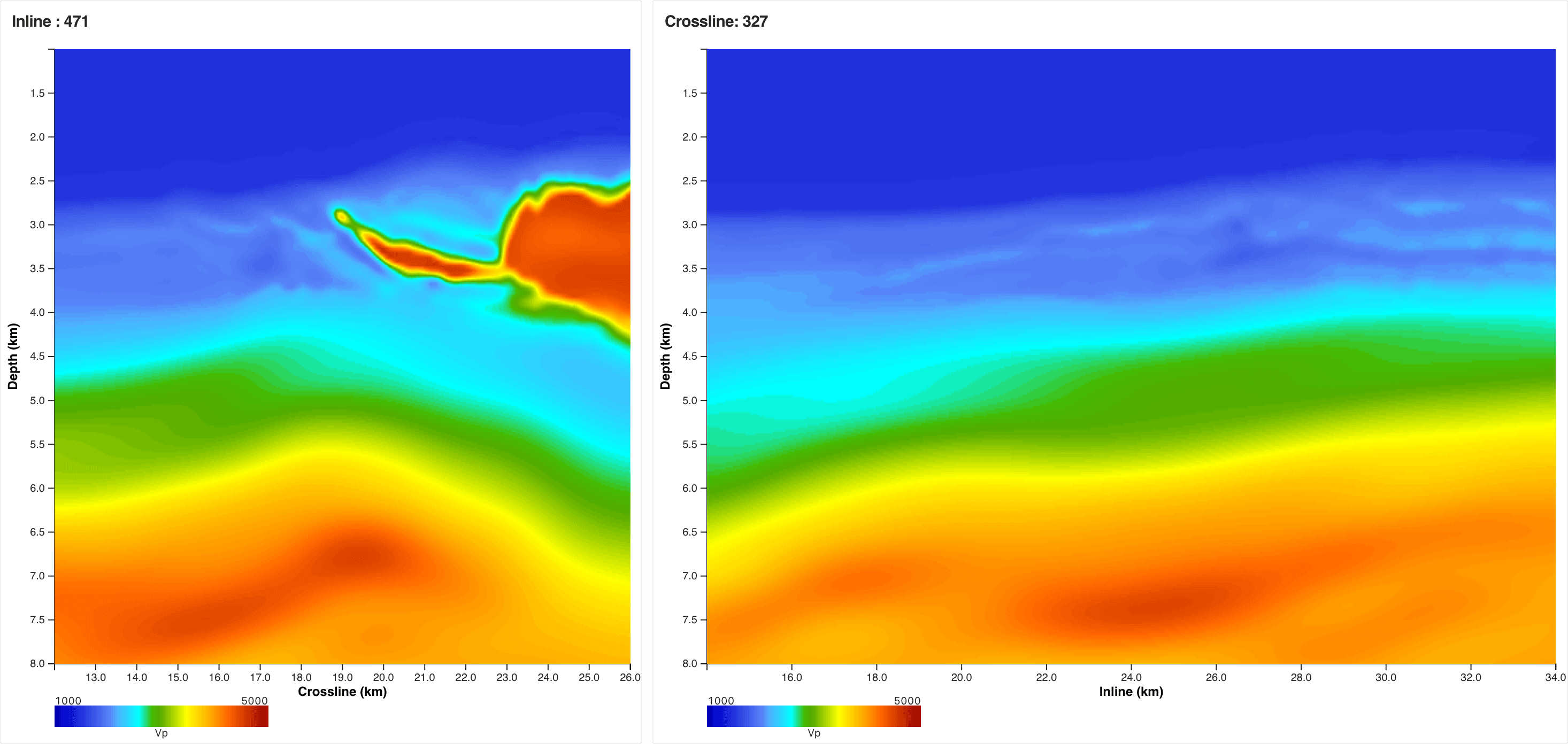 Salt sharpened · iterated AWI + RWITrend corrected · before
The reflectivity response
Velocity panels show what the inversion did; reflectivity shows whether the data believes it. The FWI-derived reflectivity below is generated directly from the raw field data at each checkpoint — no processing, no migration project — and doubles as a running QC of the model. Watch two things as the checkpoints advance: the salt boundary on the inline, and the continuity of the deep key reflector on both panels.
Targetting the key reflector
The deep, high-contrast layer between roughly 6.5 and 7.5 km is the key reflector in this part of the model — and it sits in exactly the low-illumination zone where updates are hardest to earn. To focus the inversion's effort there, the RWI perturbation is focused to the target region, so the update spends its energy on the reflector rather than relitigating the shallow section. The panels below show that targetted RWI perturbation at the first and last checkpoints. Early on the reflector is diffuse and breaks up beneath the salt high; by the salt-sharpened checkpoint it is a clean, continuous doublet on both the inline and the crossline.
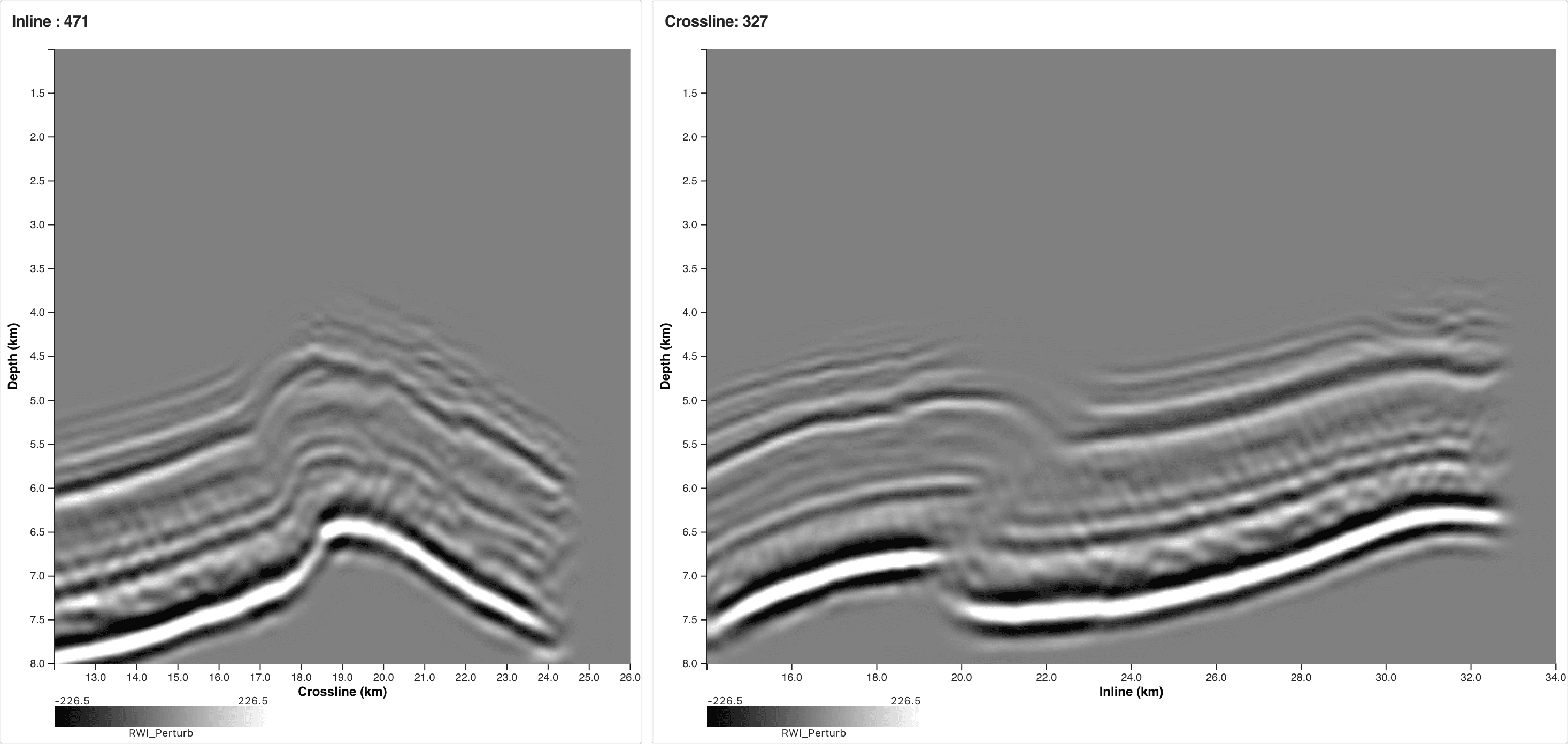 Salt sharpened · after
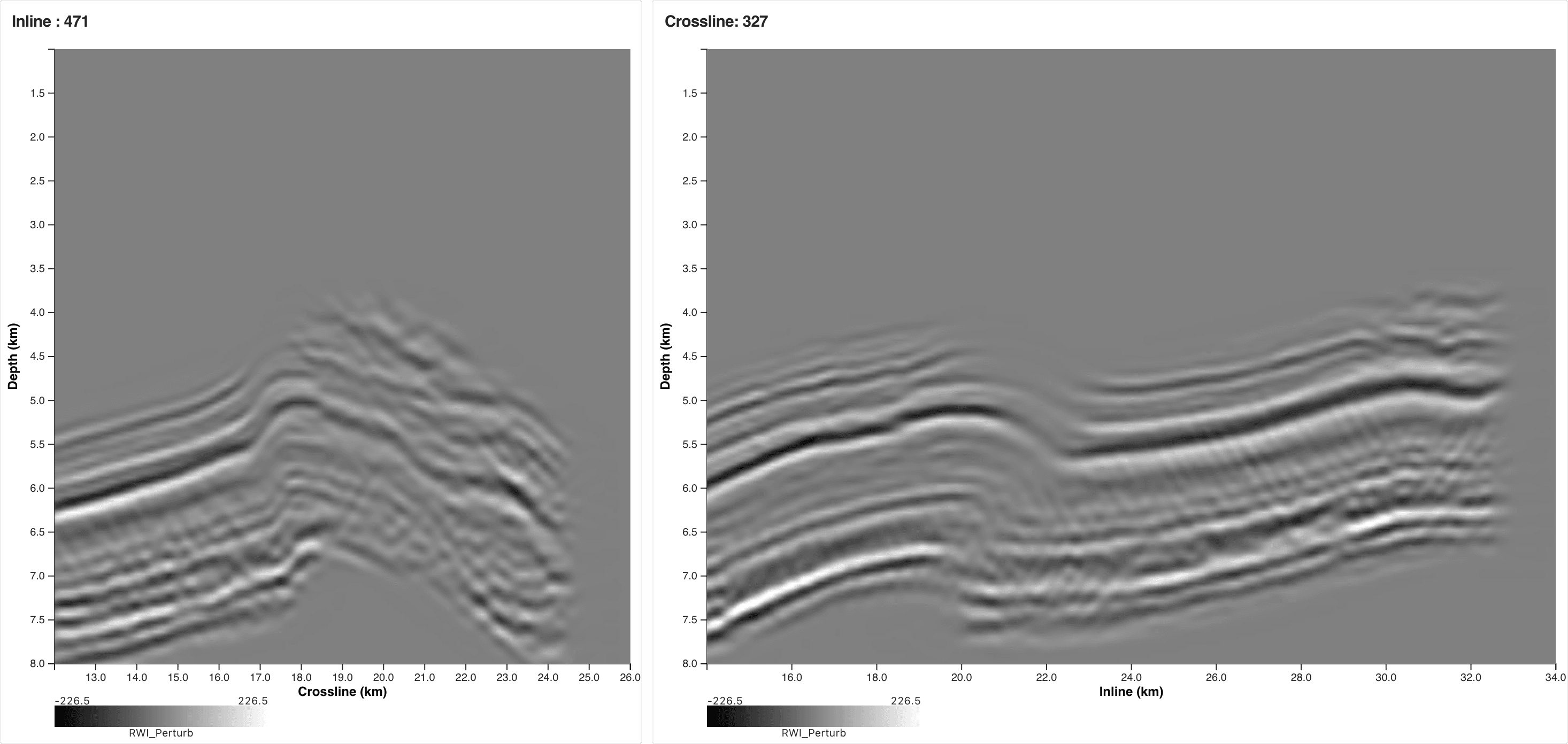 Salt emerging · before
The key reflector in map view
Sections can flatter a model along the one line you chose to display. A depth slice through the target region shows the reflector everywhere at once. At the salt-emerging checkpoint the map view is dominated by ringy, interfering stripes — the signature of a mispositioned event. By the salt-sharpened checkpoint the slice resolves into a coherent structural pattern that reads like geology rather than interference.
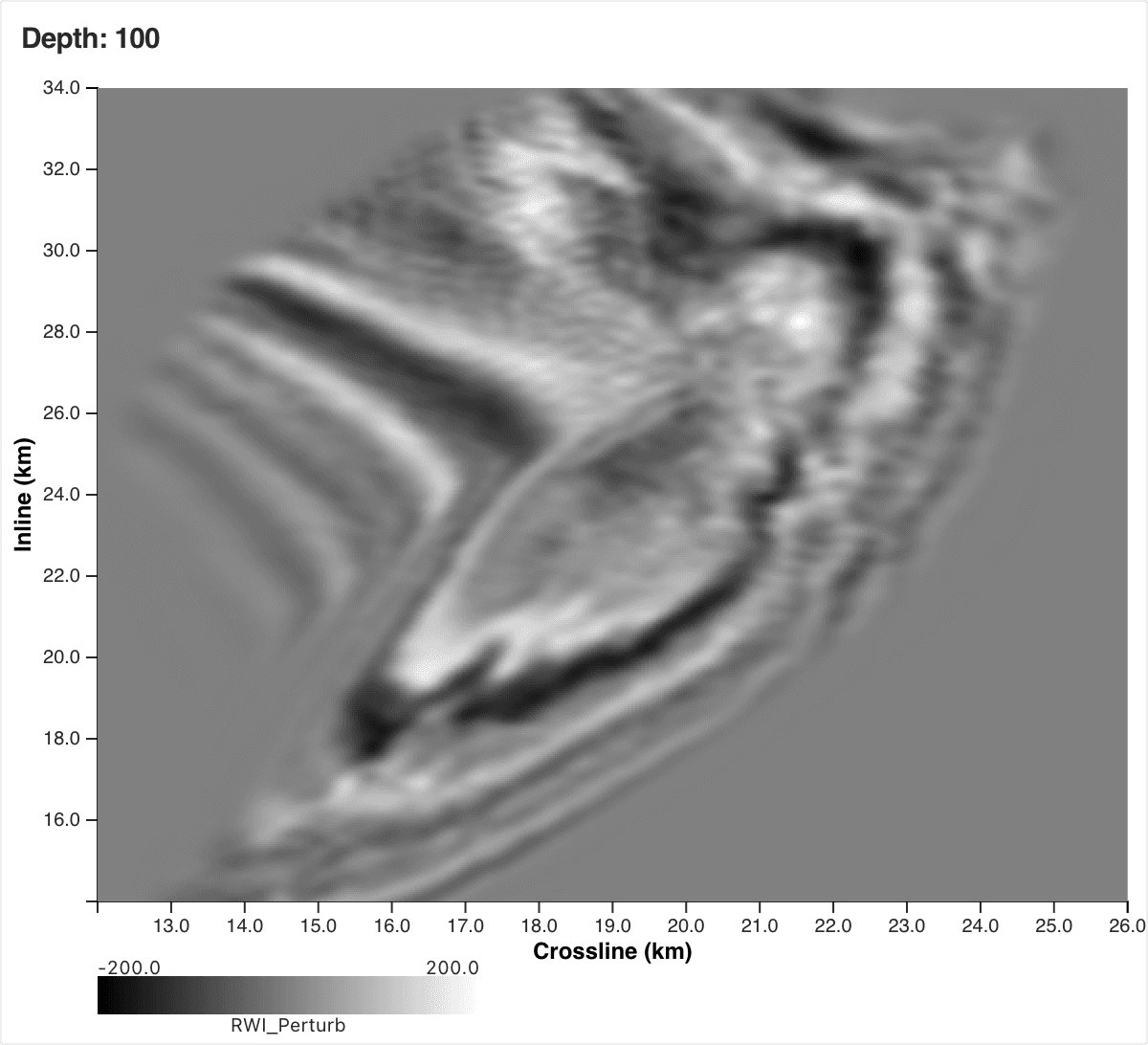 Salt sharpened · after
 Salt emerging · before
Back to the data domain
The final arbiter is always the data. Because the targetted update changes the model only around the key reflector, its effect shows up surgically in the predicted data: the deep reflection package associated with the target strengthens and aligns, while everything else is left untouched. The gathers below are the predicted data for the same shot at the first and last checkpoints — drag the slider across the deeper arrivals to see the reflection energy fill in and organise.
 Salt sharpened · after
 Salt emerging · before
What comes next
The targetted-RWI passes over the key reflector continue beyond the salt-sharpened checkpoint, and the next update will put numbers on what these images show — the quantitative trace-fit metrics that track, checkpoint by checkpoint, how much better each model explains the raw field data. As always, the model only gets credit for what the data can verify.
Want this level of QC on your model build?
Every figure in this post — velocity, reflectivity, targetted perturbations, predicted data — comes straight from the live XWI workflow. If your sub-salt target needs the same treatment, let's talk.
Talk to our teamExplore further
- → Read the full story: Breaking Through Complex Salt
- → Step through the full 15-stage model-building sequence (interactive)
Part of our ongoing work at Alaminos Canyon, Gulf of Mexico, in partnership with Shell. The authors thank Shell for permission to present this work and to use the dataset shown.